
Schools are judged on what can be seen. Results, buildings, the look of a corridor on an open morning. All of it matters. None of it is where a school is actually decided.
Most of what determines whether a school will be any good is settled before it exists, across two or three years that nobody writes about, by people the children will never meet. That period is our work, and this is what it consists of.
It begins with the city, and with a question that sounds commercial but is not. Can an excellent school be crafted here, or only a viable one? Those are different questions with different answers. Demand alone will support a school that is adequate. It takes considerably more than demand to produce one a city would miss if it closed.
Then the building, which is a decision about teaching as well as architecture. Rooms have a say in what can happen inside them. A site that cannot hold the school we intend is not a site we can improve our way out of later.
Then leadership, which is the decision with the longest consequences. A Head sets the expectations of a classroom, the standard against which every subsequent appointment is made, and much of the character a school will still have decades from now. Choosing well is only half of the task. The other half is giving that person the time and the authority to build a culture that will endure.
Then the curriculum, and specifically what the country a school stands in is permitted to do to it. An international school can treat its host nation as enrichment: a language lesson, a trip, a day in the calendar. The alternative is harder and worth the difficulty. The language, history and habits of the city belong in the core of what a child learns, to a standard the school is willing to state out loud. That is not a cultural addition. It is part of being educated in a place.
Then character, which is where most statements of educational philosophy go soft. The usual formulation gives academic achievement and personal development equal weight, as though they were competing claims to be balanced. They are not. Children work hardest where they feel secure, and are most willing to be wrong in front of others where they know they will not be humiliated for it. Kindness is not a counterweight to ambition. It is the condition that makes ambition possible, which is why it belongs inside a conversation about results rather than beside one.
And then the decisions not to proceed. A site that cannot become the right building. A city where we could not recruit teachers we would want our own children taught by. Declining those is not caution. It is the same standard applied earlier, when it costs least to apply.
None of this is visible on an open morning. All of it will be felt on an ordinary Tuesday in ten years’ time. Two schools open in September 2027, and we would rather be judged on these decisions than on our intentions.
Exceptional schools. Distinctive places.
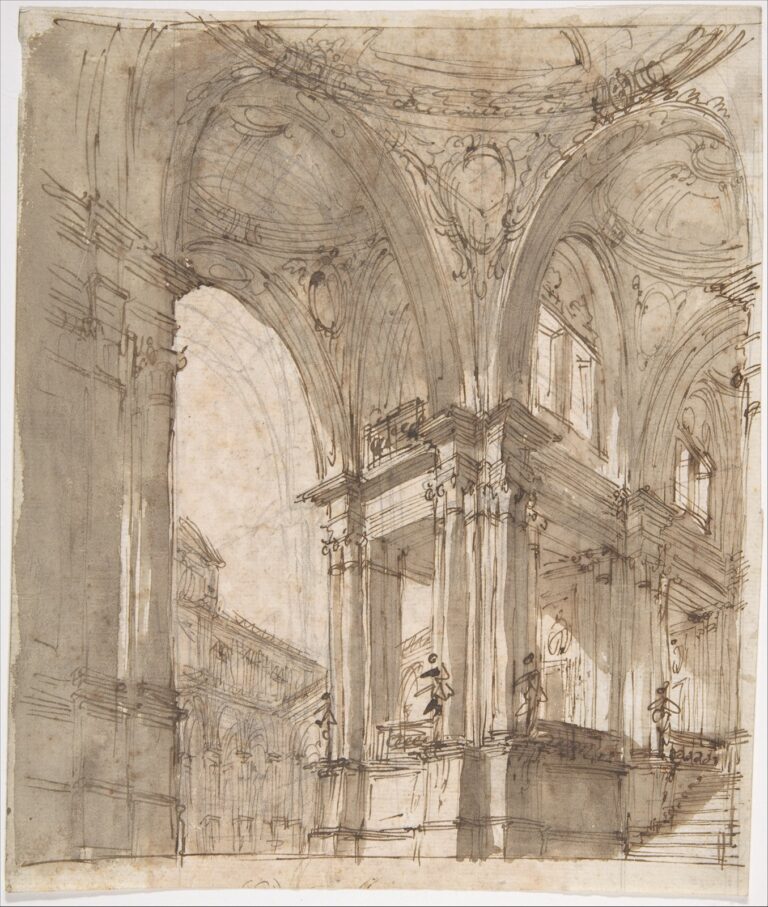
Header image: attributed to Ferdinando Galli Bibiena, Foreshortened or Trompe L’Oeil View of the Architecture Surrounding a Courtyard. The Metropolitan Museum of Art, The Elisha Whittelsey Collection, The Elisha Whittelsey Fund, 1952 (public domain).